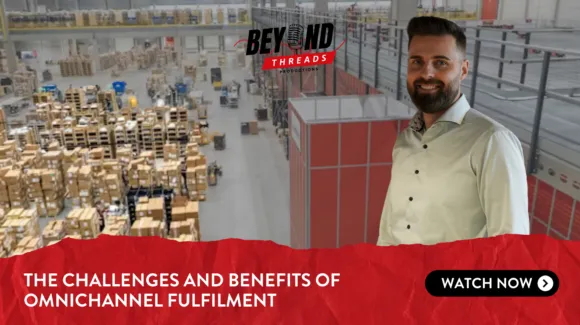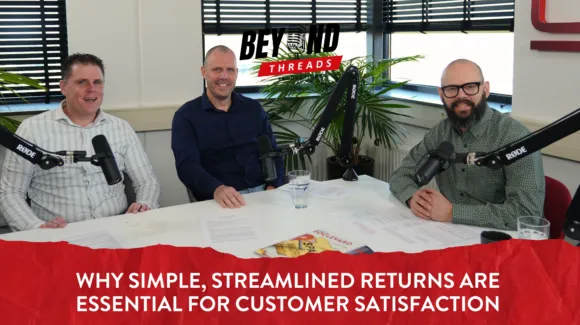









Operating an effective omnichannel fulfilment model has become essential for brands looking to elevate customer experience and maintain a competitive edge. In this episode of the Beyond Threads podcast, Lewe Goldmann, Supply Chain and Operations Director at CLOUD NINE, shares how the premium hair styling brand has accelerated growth through smart omnichannel fulfilment strategies.
Known for its high-performance straighteners, curling wands and hair dryers, CLOUD NINE has become a go-to brand for salon-quality styling at home. Lewe reveals how the company has integrated multiple customer touchpoints – across online, retail and wholesale – into a seamless, responsive logistics model.
From inventory management to supply chain visibility, this episode is packed with practical insights for any brand looking to scale its omnichannel fulfilment strategy.

This video is unavailable because marketing cookies have not been accepted. Click here to update your cookie preferences.
Why omnichannel fulfilment is key to a consistent customer experience
Omnichannel logistics is all about creating a seamless customer journey across every touchpoint – whether that’s online, in-store or through social platforms. Unlike a multichannel strategy, which simply involves selling on multiple platforms, omnichannel fulfilment ensures that every interaction feels consistent and connected.
For brands like CLOUD NINE, this approach is essential to delivering a high-quality, unified experience at every stage of the customer journey. “Omnichannel really means a seamless approach,” said Lewe. “It’s not just about selling through different channels but making sure the experience always feels consistent and cohesive for the customer.”
Listen To Audio Only
How omnichannel fulfilment drives reach, efficiency and customer loyalty
One of the primary benefits of a strong omnichannel fulfilment strategy is that it enables fashion brands to connect with customers across the platforms they use most – including platforms such as TikTok, Instagram or Facebook. By maintaining a consistent brand experience across all channels, brands can boost engagement, increase reach and build long-term customer loyalty.
Another key advantage is improved operational efficiency. Integrated fulfilment across multiple sales channels allows for dynamic stock allocation, helping brands to match inventory to real-time demand. For CLOUD NINE, this flexibility is made possible through its partnership with Bleckmann.
With the ability to adapt quickly and maintain stock accuracy, omnichannel fulfilment has become a powerful engine for growth and customer retention. “With the right logistics partner, we can operate seamlessly across both B2B and B2C channels,” said Lewe. “This helps us optimise stock levels and enhance customer satisfaction.”
Overcoming the complexities of omnichannel fulfilment
While omnichannel fulfilment unlocks major advantages, it also presents operational challenges that brands must navigate carefully. One of the biggest is ensuring a consistent brand experience across all touchpoints. From marketing assets to post-purchase communications, every customer interaction must reflect a unified brand identity. This requires strict quality control and continuous oversight across channels.
Another key challenge is meeting the varied expectations of different customer groups. B2B partners often prioritise high-volume efficiency and streamlined logistics, while B2C customers prioritise fast, personalised service with full transparency and tracking. CLOUD NINE has tackled this with fulfilment operations that deliver B2C-style service expectations across all channels – offering proactive communication, real-time tracking and fast response times to all customers. This ensures that every stakeholder receives the same high-quality experience, regardless of order size or channel.
Scaling smarter: How omnichannel fulfilment fuels faster business growth
Effective logistics isn’t just about meeting today’s customer expectations – it’s a key enabler of sustainable business growth. With a strong omnichannel fulfilment framework, brands can enter new markets more efficiently, without overhauling core operations. For example, CLOUD NINE recently expanded into the UAE, where shopping behaviours and customer expectations differ from its base in the UK. However, thanks to the brand’s established omnichannel strategy, CLOUD NINE was able to manage the expansion smoothly without disrupting ongoing operations or compromising customer experience.
As the global retail landscape continues to evolve, a robust omnichannel fulfilment framework is essential in empowering brands to remain agile and scale with confidence. By providing the flexibility to quickly adapt to shifting customer expectations, you can ensure a consistent, high-quality customer experience across every touchpoint.
Want to find out more about how CLOUD NINE is optimising its omnichannel strategy? Press play on the podcast now to get the full story, or get in contact today for a free consultation with a Bleckmann expert!
__________________________________________________________________________________________________________________
Transcript
Johnny (Host):
Welcome to the Beyond Threats podcast by Blackman. Whether you’re tuning in from your commute, office, or relaxing at home, we appreciate your time. Today, we’re exploring the omni-channel advantage. I’m joined by Louie Goldmann, Supply Chain and Operations Director at Cloud9 Hair. Welcome, Louie.
Louie (Cloud9 Hair):
Thank you, Johnny.
Johnny:
Before we kick off, could you give us a quick introduction to yourself and Cloud9 Hair?
Louie:
Of course. I’m the Supply Chain and Operations Director at Cloud9 Hair. My remit covers inbound purchasing, logistics (outbound), warehousing, compliance, product development, customer service, and returns—essentially the full logistics cycle.
Johnny:
That’s quite a lot to handle. Let’s start with omni-channel: what is it, and why is it crucial for brands like yours?
Louie:
A big misconception is confusing omni-channel with multi-channel. Multi-channel is selling through different channels, while omni-channel is seamless and consistent across all channels. For example, marketing campaigns—whether via podcasts, social media, or online ads—should all feel cohesive so the brand is instantly recognizable.
The customer journey must also be seamless. A click-through on TikTok should feel the same as shopping on the website. Omni-channel is about creating a unified, consistent experience across all platforms.
Johnny:
How does adopting an omni-channel approach improve customer reach and engagement?
Louie:
There are so many platforms today—TikTok, Instagram, Facebook. A consistent omni-channel presence ensures customers have the same experience, regardless of the platform they use. If one channel provides a poor experience compared to another, you risk losing that customer.
Johnny:
How does your omni-channel strategy help manage inventory efficiently across different channels?
Louie:
Omni-channel fulfillment is key. It allows us to adjust which SKUs or product ranges are promoted based on stock availability. By partnering with Blackman, we can quickly toggle between B2B and B2C delivery models. This seamless integration enables efficient inventory management and ensures that both retailers and end consumers receive consistent service, which strengthens our relationships and reputation.
Johnny:
You mentioned different types of customers—how do you ensure a consistent experience across B2C and B2B?
Louie:
Understanding the customer is crucial. B2B and B2C orders differ in scale and packaging requirements, but the underlying principles are the same: products must be well-packed, delivered quickly, and tracked accurately. We ensure that communication standards, packaging quality, and delivery speed are consistent across all channels, adapting details as needed.
Johnny:
What challenges have you faced integrating omni-channel strategies, and how did you overcome them?
Louie:
The biggest challenge is consistency. As we grow and create marketing assets, it’s essential that messaging, visuals, and formats align across all channels. Different platforms require slightly different media formats, but they must still feel cohesive. Balancing consistency with platform-specific flexibility is the key tradeoff.
Johnny:
How does an omni-channel strategy help you remain competitive, especially when entering new markets?
Louie:
When entering new markets, the customer behavior might differ. For example, UAE customers shop differently than UK or European customers. Having omni-channel systems already in place allows us to seamlessly add new channels and markets without disrupting our existing processes. It’s about stacking lessons learned and applying them to new regions.
Johnny:
Thanks, Louie. Today, we’ve covered the full omni-channel journey—from front-end marketing to fulfillment—and highlighted challenges like maintaining consistency and providing a unified experience across channels.
Before we conclude, how can listeners reach you if they have further questions?
Louie:
I’m on LinkedIn. Feel free to reach out there—it’s the best way to contact me.
Johnny:
Thanks, Louie. That wraps up today’s episode. Subscribe to Beyond Threats and follow Blackman for the latest trends and innovations in logistics. Stay tuned for the next episode!