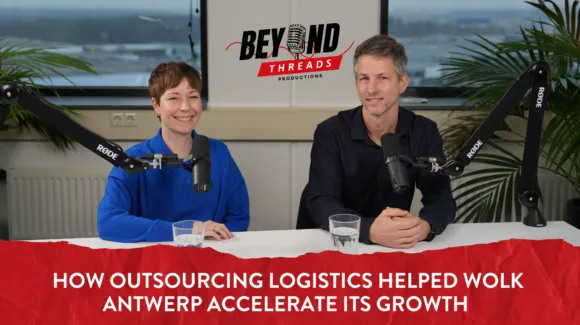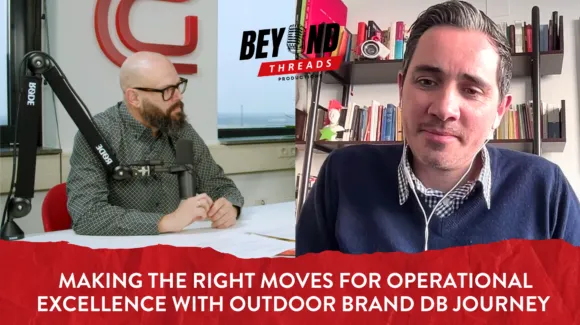









Did you catch our recent Beyond Threads webinar on the power of online marketplaces for emerging fashion brands? In this latest Beyond Threads podcast episode, we dive even deeper on the topic – exploring how fashion brands can strategically integrate e-commerce marketplaces into a seamless omnichannel fulfilment model.
Press play to hear from Bleckmann experts Erik Janssen Steenberg and Steven de Bruin, who are joined by Asa Sarel, Co-founder of cross-border B2B platform Global Bridge. Learn how Bleckmann’s collaboration with Global Bridge is helping brands to simplify and scale access to leading online marketplaces – unlocking smarter global expansion.

This video is unavailable because marketing cookies have not been accepted. Click here to update your cookie preferences.
The benefits of online marketplaces for fashion brands
For fashion brands looking to scale, marketplaces are a powerful tool within an omnichannel fulfilment strategy. They enable brands to expand into international markets without the overhead of physical retail operation, offering a fast-track route to global growth.
Marketplaces also enhance visibility, especially for emerging or independent labels with smaller audiences for their own e-commerce sites. By reaching new audiences and diversifying sales channels, brands can reduce their reliance on a single platform – mitigating risk and improving resilience in the face of shifting consumer behaviour.
Listen To Audio Only
The challenges of expanding your brand with marketplaces
While marketplaces offer significant growth opportunities, implementing a successful expansion strategy within an omnichannel fulfilment model comes with its own set of challenges. For example, brands must maintain consistency in product listings, pricing and customer service across multiple platforms – ensuring a cohesive and reliable shopping experience wherever customers choose to engage.
Meanwhile, logistics and fulfilment can also prove challenging. Brands must determine whether to manage international shipping in-house or partner with local fulfilment providers to optimise delivery times and costs. In addition, returns management adds another layer of complexity, with inefficiencies quickly leading to mounting costs and operational delays. Finally, robust technological integration is essential. Seamless IT connections with marketplace platforms and customs systems are critical to ensure real-time visibility, compliance and uninterrupted omnichannel fulfilment flows.
Introducing Global Bridge: A unique marketplace solution
Global Bridge presents an innovative solution to many of the challenges associated with marketplace expansion. As Asa Sarel explains, Global Bridge is a fully integrated, cross-border B2B platform designed to simplify marketplace onboarding and streamline omnichannel fulfilment for fashion brands.
One of Global Bridge’s standout advantages the seamless marketplace integration it offers brands, enabling immediate access to over 500 premium marketplaces worldwide. This eliminates the time-consuming onboarding processes that can typically slow down market entry – meaning you can see your brand on premium platforms such as Macy’s, Zalando, Neiman Marcus and Nordstrom in a matter of months.
Another standout feature of the solution is its end-to-end logistics capability, delivered in partnership with Bleckmann. Our collaboration enables brands to benefit from a comprehensive fulfilment infrastructure – including warehousing, international shipping and returns management – within a single, scalable framework.
But what really sets Global Bridge apart is its pay-as-you-sell model, which removes the need for significant upfront investment. This makes global expansion more accessible and less risky for growing brands. In addition, the platform ensures full control and visibility over sales data, providing the transparency and actionable insights needed to drive smarter decisions across the omnichannel fulfilment journey.
Marketplaces: The future of fashion retail?
E-commerce marketplaces are firmly establishing themselves as a cornerstone of modern fashion retail. Offering unmatched agility and adaptability, they empower brands to respond swiftly to evolving consumer expectations and accelerate growth. As Erik notes, they not only drive traffic but also deliver unmatched flexibility, cementing their role as a key sales channel within any robust omnichannel fulfilment strategy.
And while the path to marketplace integration can seem complex, platforms like Global Bridge are streamlining the journey for brands. By simplifying onboarding, logistics and data management, they enable brands to tap into the potential of marketplaces with greater ease and confidence. As retail continues to shift toward platform-driven models, brands that embrace marketplaces as part of their omnichannel fulfilment approach will be best positioned to scale and thrive in a fast-changing fashion industry.
Curious to find out how e-commerce marketplaces could accelerate your brand’s global growth? Press play on the latest episode of the Beyond Threads podcast or get in contact today for a free consultation with a Bleckmann expert!
__________________________________________________________________________________________________________________
Transcript
Johnny (Host):
Welcome to the Beyond Threats podcast by Blackman. Whether you’re tuning in from your commute, office, or relaxing at home, we appreciate your time. In each episode, we dive deep into topics shaping the future of fashion and lifestyle logistics. Today, we’re covering fashion marketplaces with Global Bridge.
To kick things off, Eric, can you tell us more about fashion marketplaces, their value, and how they fit into omni-channel strategies, starting with a quick introduction of yourselves?
Eric (Business Development Manager, Blackman):
Yes, absolutely. I’m a business development manager at Blackman. My role differs from a sales manager because I often work on bespoke components or redesigns that add value to a customer’s supply chain and fulfillment.
Regarding marketplaces, they’re rapidly taking over e-commerce. Larger brands often generate enough traffic themselves, but smaller or upcoming brands struggle to gain traction. Marketplaces are well-known in their regions and generate the foot traffic that brands need. There’s more competition and rules to follow, but overall, the exposure makes marketplaces worthwhile as part of an omni-channel strategy.
For example, if a brand like Johnny Swimwear in Europe wants to sell in the US, they must decide how to stand out and operate there. Should fulfillment happen from Europe or locally? Should they use a 3PL? Go through marketplaces or work directly with retailers? These are the decisions that guide marketplace strategy.
Johnny:
Thanks, Eric. Steven, can you introduce yourself?
Steven (Cluster Director, Blackman):
I’m Steven de Bruin, Cluster Director at Blackman, mostly responsible for operations in setups like this. I ensure new solutions actually work within Blackman.
Johnny:
From the first idea to shipping on marketplaces, is it complex for a brand?
Steven:
Yes, it’s quite complex and requires effort. First, contracts and financials must be in place with each marketplace. Then, IT connections are required between brands and marketplaces. Storage and fulfillment need planning—whether from the brand’s own warehouse or closer to the customer using a 3PL. Customs must also be handled properly.
Finally, returns are a big challenge. If customers return items, brands must decide whether to ship them back internationally or find a local solution. These five aspects make the process cumbersome.
Johnny:
Thanks for clarifying, Steven. Asa, welcome! Could you introduce yourself?
Asa (Co-founder & President, Global Bridge):
I’m Asa Sarel, co-founder and president of Global Bridge, a cross-border B2B platform that provides a comprehensive solution for brands to sell on any retailer or marketplace worldwide.
For the past 20 years, I’ve specialized in M&As and strategic partnerships in fashion, mainly helping brands expand internationally.
From the marketplace perspective, retailers are facing challenges. There’s been a shift from traditional wholesale to marketplaces, accelerated by global instability, COVID, and unpredictable seasons. Retailers want to reduce inventory exposure but still present full brand collections without purchasing inventory upfront.
Retailers often aren’t importers, so brands must localize inventory, limiting possibilities. Onboarding new brands is resource-intensive, requiring IT, legal, and commercial support.
Johnny:
For small brands like Johnny Swimwear, it’s challenging to get noticed by larger marketplaces.
Asa:
Exactly. Especially when entering new countries or continents, brands need support to secure a presence. Marketplaces are selective, and brands must decide which ones to engage with.
Johnny:
Are there solutions to simplify this?
Asa:
Yes. Global Bridge addresses this through four pillars:
Integration: Instant access to 500+ retailers and marketplaces worldwide, eliminating onboarding and long integration processes.
End-to-end logistics: In partnership with Blackman, we offer fulfillment from local operations to the end consumer, including returns. We manage a network of 65+ warehouses worldwide.
Pay-as-you-sell model: Brands avoid upfront costs or resource allocation for international marketplace engagement.
Control, data, and visibility: Brands gain full insights into sales, inventory, and KPIs, unlike traditional wholesale.
These pillars simplify and optimize global marketplace operations for brands.
Johnny:
So Global Bridge helps both brands and marketplaces navigate complexities, manage logistics, control costs, and gain data insights.
Eric:
Marketplaces are attractive primarily for foot traffic and flexibility to respond to changing trends and customer needs.
Steven:
Marketplaces are irreversible in today’s retail landscape, and there are solutions to make entry smoother.
Eric:
Working with a partner who can manage both physical and digital supply chains reduces complexity, time, and budget consumption. Education on the right partner is key before choosing a platform.
Johnny:
If listeners have questions, how can they reach you?
Asa:
Visit www.globalbridgeonline.com<?xml version="1.0" encoding="UTF-8"?>
<?xml version="1.0" encoding="UTF-8"?>
and use the contact section.
Eric:
Through Blackman’s website or LinkedIn.
Steven:
Also on Blackman’s website and LinkedIn.
Johnny:
That concludes today’s episode. Subscribe to Beyond Threats and follow Blackman for the latest trends in logistics. Thanks for tuning in!