








From travel gear to high-end leather bags, renewal is widening its scope
Resale has been gaining a higher profile in recent years, with even giants such as eBay now offering a ‘Preloved’ segment through which brands can sell their second-life goods. Big hitters such as The North Face and Tommy Hilfiger – alongside beloved brands such as Nobody’s Child – are already on the platform. It’s a powerful reflection of resale’s mainstream status. But there’s a catch. Most of the products that you’ll find on eBay Preloved, and on most resale platforms, are clothes. The reason behind this is somewhat evident. There are already established processes for clothing renewal that can easily stand up to a cost-benefit analysis. And for other product categories? Not so much.
"From broken zippers to scuffs and scratches, our team has developed a series of [...] fixes that will keep products in circulation for years to come."
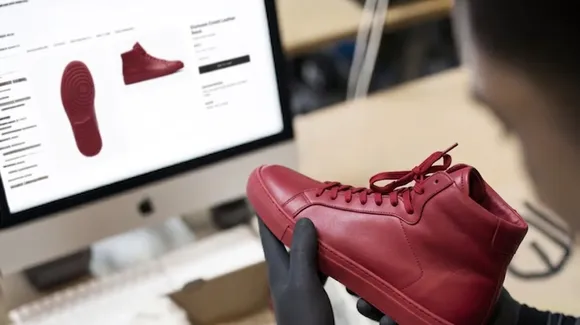
Think of a luxury leather handbag that’s scuffed or has a broken buckle. This might be fine in a charity shop or on Vinted, but if a brand is looking to recoup more of its original value by selling it through an owned resale channel, it’s going to have a problem. The same is true of shoes, which often have unpredictable wear patterns and intricate components. Faced with a pile of preloved shoes or handbags, a circular service provider would be justified in feeling apprehensive. But thanks to recent advances in renewal techniques – and the growing willingness of consumers to switch to secondhand in the face of economic pressures – hard-to-renew products are stepping into the circular spotlight.
Tailored renewal routes for complex products
Since shoes and bags are not initially covered in the scope of forthcoming EPR legislation, it’s tempting for brands to consider them as a secondary circular concern. It’s therefore understandable why developing renewal routes for these more complex categories has not been a priority for many circular players, as they focus instead on scaling up and costing down more mainstream processes. However, this approach ignores the value retention question: if bags and shoes simply leave your brand’s ecosystem at the end of their first life (hello, Vinted), you’re missing out on a valuable secondary revenue stream.
As Hans Robben of Bleckmann’s Renewal Workshop explains, this can lead to a frustrating situation for brands operating in the category. “If you’re a footwear or accessories brand, you can have a potential treasure trove of goods on your hands – whether it’s trade-ins or damaged returns,” he says. “But without the right capabilities to renew these quickly and cost-effectively, you simply can’t turn it into a viable model. What we’ve been working on over the past few years is removing the operational and cost barriers so brands can finally access the maximum value from their pre-loved products.”
A strategic approach to operational implementation
With so many challenges to overcome, Hans has adopted a client-led approach to including more hard-to-renew categories in the Renewal Workshop’s offering. The journey began in 2024, with two separate pilot programmes targeting leather bags and luggage. Hans and the team set up facilities at Bleckmann’s distribution centres in Grobbendonk and Rieme, Belgium, dedicated to developing the processes and techniques for a streamlined renewal process. “One of the most important steps in the development journey was defining boundaries in terms of what issues we can and can’t address,” Hans continues. “Through working with repair experts, we quickly learned what’s feasible within a defined cost-time window, and from there we created the framework for a fully scalable model.”
The first live example of more complex renewal operations in action is our collaboration with high-end Norwegian luggage brand Db Journey, which began in 2025. Here, the brand-first approach that we developed during the pilot phase of the programme proved to be a major asset. “Sustainability is embedded in Db Journey’s DNA, with a strong focus on expanding their portfolio of circular solutions in a way that prioritises environmental impact and customer experience,” adds Hans. “Drawing on our learnings from the pilot, we worked together to translate Db Journey’s values into a custom-designed solution.”
The result of this was the brand’s recently launched Lost & Found initiative, which is now available to all customers in the EU and Norway. It combines a customer trade-in programme with renewal capabilities in Belgium and Norway to restore preloved kit to top condition. Lost & Found products are then sold on the brand’s owned re-commerce site, ensuring that Db Journey gear can stay in circulation for longer. However, this was just the start of Db Journey’s circular ambitions. Together with Bleckmann, the company recently launched a dedicated repair service. This means Db Journey customers from the EU and Norway can send in their equipment (or drop it off in store) to get it cleaned and repaired.
The practicalities of delivering circularity for travel gear
Travel gear presents a particularly challenging case for circularity. Luggage, backpacks and travel accessories are typically constructed from a combination of synthetics and hard components, such as wheels, zippers and telescopic handles. This complex assembly requires specialised cleaning and repair capabilities that go far beyond ‘traditional’ textile renewal. It also means that operators need a detailed knowledge of the brand’s product range, so they can provide appropriate fixes and choose the correct spare parts if necessary. “From broken zippers to scuffs and scratches, our team has developed a series of tried-and-tested fixes that will keep Db Journey products in circulation for years to come,” says Hans. “With two renewal operations running simultaneously, maintaining quality and consistency of service remains paramount.”
To ensure effective monitoring, the entire operation is underpinned by a robust data framework. This enables tracking of each item throughout the renewal journey, ensuring that customers know beforehand exactly the condition of the pre-loved product they’re receiving. It’s also important from an operational efficiency and optimisation perspective. End-to-end monitoring of renewal supply chains allows the brand to keep track of the flows of second-life goods and providing valuable insights. For example, the data can reveal which product types renew most cost-effectively, which damage patterns occur most frequently and where design improvements could enhance future circularity efforts. For hard-to-renew circularity to keep scaling beyond pilot projects, this combination of physical renewal capability and digital tracking infrastructure is essential.
What’s the business case for ‘expanding the circle’?
Extending product lifecycles in hard-to-renew categories can represent a powerful business lever with multiple revenue and retention benefits. Of course, implementing circular models comes with strategic risks, and scaling renewal profitably requires careful planning. Regulatory complexity, from digital product passports to warranty obligations, can also become a burden without the right systems in place. And consumer trust remains a major barrier: buyers need assurance that second-life items are safe, high-quality and backed by credible refurbishment credentials. Yet despite these challenges, the value proposition becomes increasingly clear when brands approach circularity from a holistic perspective and understand the necessary infrastructure.
The retention effect is perhaps the most immediate business benefit. Trade-ins, buy-back offers and refurbishment programmes create circular touchpoints that keep customers within the brand ecosystem long after their initial purchase. Inriver's recommerce research shows that brands integrating recommerce into their core operations can recover significant value, build loyalty and improve ESG transparency. This isn’t just theoretical: it’s already working for brands like Db Journey, where repair services function as powerful customer loyalty tools. While repair doesn’t generate direct revenue in the same way as resale, it demonstrates that the company stands behind the quality of its products and cares about reducing their environmental impact.
From cost to capability: building competitive advantage
The Db Journey-Bleckmann partnership demonstrates that even complex, hard-wearing travel products can successfully re-enter the market – provided brands combine the right infrastructure with robust data systems and, crucially, commit to genuine collaboration. As Hans emphasises, “What we've been working on over the past few years is removing the operational and cost barriers so brands can finally access the maximum value from their pre-loved products.” For brands in ‘hard-to-renew’ categories, the lesson is clear: circularity becomes commercially viable when design-for-repair principles are paired with strong operational expertise, with both partners investing in transparent, solution-focused collaboration. The programme proves that circularity beyond traditional apparel is not only feasible but commercially promising when these elements align.
As recommerce and circular services more broadly mature, they’re transforming from a ‘nice-to-have’ into a key structural asset. Reverse logistics, data architecture and refurbishment know-how build long-term resilience. And, by developing second-life strategies now, brands can position themselves ahead of compliance risks and gain a reputational advantage. The customer appetite for renewed goods does not discriminate between product categories, and new players are taking advantage of this. Young companies are buying up used stock from sorting facilities, operating a successful ‘refurbish-and-resell’ model. With circular capabilities advancing fast, the opportunities for additional revenue streams will continue to grow. It’s up to brands to seize them.