








As global fashion brands have expanded across channels and borders over the past decade, logistics has increasingly become a strategic driver of competitiveness. For Superdry, that means working closely with long-term logistics partner Bleckmann to match fast-changing market dynamics with reliable, flexible and data-driven fulfilment.
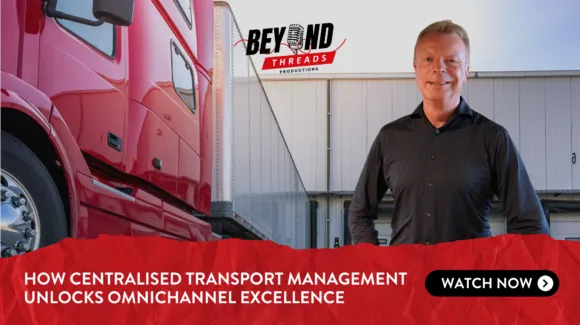
Press play on the Beyond Threads podcast to explore how Bleckmann supports Superdry to deliver seamless fashion logistics with expertise, agility and innovation.

This video is unavailable because marketing cookies have not been accepted. Click here to update your cookie preferences.
In this episode of the Beyond Threads podcast, host Erik Janssen Steenberg speaks with Panos Christoforos, Head of European Warehousing and Transport Operations at Superdry, and Ruud Mars, Business Development Manager at Bleckmann. Together, they explore how a partnership built on trust, transparency and shared ambition has developed into a robust logistics framework designed for resilient omnichannel growth.
Read on to discover how streamlined collaboration and effective communication drive operational excellence across the fashion value chain.
Listen To Audio Only
Partners in excellence: Built on trust and shared expertise
Superdry is a UK-based brand set up in 1985 that has become a firm favourite both in its home market and overseas. Its relationship with Bleckmann spans almost fifteen years – a partnership grounded in mutual trust and deep sector knowledge. “There are many companies doing logistics,” says Panos, “but when you have expertise in a specific industry, it makes a huge difference in how you respond to changes and challenges.
From the early stages of Superdry’s European expansion, Bleckmann’s fashion specialisation has enabled agile scaling across markets and channels. The teams work side by side to ensure strong alignment on forecasting, carrier performance and capacity. This proximity has proved invaluable, both during peak periods and market evolutions, from Brexit to the rapid growth of e-commerce. Throughout, agile adaptation has been critical to maintaining service continuity and customer satisfaction.
Omnichannel excellence: One system for every customer
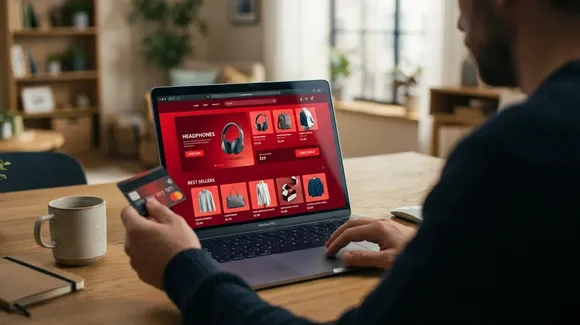
Superdry’s logistics framework serves retail, e-commerce and wholesale through a single integrated system – ensuring service consistency across every touchpoint. “Whether a shopper orders online or buys in-store, they expect the same quality of experience,” continues Panos. “Our joint setup with Bleckmann makes that possible.”
All activity flows through a unified data environment, creating visibility from warehouse to customer. This unified model enables fast decision-making, accurate forecasting and consistent service across markets. Working closely with Bleckmann’s carrier management teams, Superdry can flex resources between channels as volumes shift – ensuring superior omnichannel performance. For Ruud, this approach reflects a wider strategic vision: “At Bleckmann, we’ve built a system that covers the entire omnichannel journey – not just to deliver today, but to anticipate what clients will need next.”
Agility at scale: Planning ahead for peak periods
Peak seasons can define a brand’s success, and close coordination ensures Superdry’s logistics remain resilient when volumes surge. “During the busiest times of the year, most brands do the majority of their sales,” adds Panos. “You need to make sure the forecasting is solid and that carriers and warehouses have the capacity to handle it.” Collaborative forecasting and proactive planning allow Superdry to secure resources before demand spikes – maintaining excellent service levels across Europe.
This data-driven approach brings benefits throughout the year, at all levels. Bleckmann provides comprehensive dashboards covering all aspects of logistics operations, including deliveries, carrier performance and warehouse. This oversight ensures any areas for improvement are identified early and acted upon. “We’ve captured enormous amounts of data,” Ruud explains. “Now we’re asking what we can do with all this knowledge – not just for Superdry, but for every partner.” Through systems like BlueRock TMS, insights are transformed into action, helping both teams anticipate bottlenecks, refine routing and continuously improve performance across markets.
Innovation in motion: Automation and AI drive performance
Bleckmann is investing heavily in automated warehouse systems that improve throughput and efficiency while enabling faster fulfilment. Together, the teams are exploring how predictive analytics can optimise routing, reduce costs and enhance the customer experience. “We need to stay on top of the market’s latest developments,” concludes Ruud. “With the right IT systems, we can integrate even further.” This shared commitment to innovation ensures the partnership remains adaptive – combining technology with human expertise to deliver value for end-customers and brands alike.
Press play on the Beyond Threads podcast to hear the full conversation and find out how we support Superdry’s expansion strategy with tailored omnichannel logistics solutions.
__________________________________________________________________________________________________________________
Transcript
Eric Janssen Steenberg (Host):
Hi there, and welcome to another Beyond Threads podcast by Bleckmann. As always, I am your host, Eric Janssen Steenberg. Today, we’re going to take another deep dive into what is developing and what the trends are in fashion and lifestyle, predominantly within the supply chain management sector.
Today, I’m joined by Bleckmann’s very own Ruud Mars and Superdry’s Panos Christoforos. Thank you very much for being here, guys.
Panos Christoforos:
Thank you very much.
Eric Janssen Steenberg:
The reason you’re both here today is because we’re going to take a deep dive into why logistics and transport should—and need to be—a strategic element of the overall operation.
Panos, can you briefly introduce yourself, explain what you do at Superdry, and why you’re at the table today? Maybe also give us a small sneak peek into how Superdry’s expansion has required you to team up with a partner like us.
Panos Christoforos:
First of all, thank you again for having me here. I’ve been working with Superdry for almost eight years now. I oversee all warehousing and transport operations in Europe.
As you’re aware, the warehousing operations are managed through Bleckmann. I even have an office in your building, which shows how tight the relationship is. I’d say I’m much closer to the Bleckmann team than to many of my colleagues, most of whom are based in the UK.
Over the years, supervising expansion across different European countries and channels has always required a strong 3PL partner to support that growth. Alongside expansion, we also had to deal with Brexit, which was a very challenging period for us. As a British brand, we had to reorganize our customs and operational setup with many unknowns.
At the same time, we’ve been trying to embed sustainability into our operations—through better warehouse efficiency, optimized transport costs, and greener solutions.
Eric Janssen Steenberg:
We’ll come back to you in a moment, Ruud, but this is too good to leave hanging.
Panos, many of our listeners are primarily consumers, and it’s not always clear what happens behind the scenes once an order is placed. Can you walk us through a day in the life of a transport-responsible manager?
Panos Christoforos:
On a daily basis, the first thing I do is open my laptop and start monitoring different reports. I make sure deliveries and carrier performance, as well as warehouse performance, are on track.
We also review feedback from customer service or the transport team to identify any ad hoc issues and try to resolve them quickly.
Almost daily, we also work on strategic initiatives to improve our customer service across all three channels—e-commerce, wholesale, and retail—together with the Bleckmann team and other carriers. That’s where most of my time is spent when it comes to transport.
Eric Janssen Steenberg:
And let’s not forget that Superdry operates in an omnichannel setup, meaning reporting, tracking, and performance monitoring across many sales channels and carriers.
Ruud, we’ve spoken before when you were responsible for transportation carrier management at Bleckmann. You did a great job there, but why did you move into Business Development? And please briefly introduce yourself.
Ruud Mars:
The change from operations to business development came from handling what we built over the past six years. I had a strategy and vision to make Bleckmann a market leader in the customer journey, supporting customers in a way that wasn’t yet seen in the industry.
We built a system covering the full omnichannel transport journey, but we hadn’t really sold it yet. That’s why I was asked to move into business development—to help position Bleckmann as a transport provider and communicate that value.
In both roles, we had a lot of contact with Superdry. Our QBRs weren’t just about performance; they were about strategy—what’s next, what developments we need to focus on, and how to support our partners.
When you look at speed versus reliability, sustainability, returns propositions, and new complexities like customs and changing minimums, these are challenges brands face every day. We need to be ready to cover those challenges.
Panos Christoforos:
I agree with many of the points you mentioned. Reliability is one of the biggest pain points for fashion brands today. Customers demand faster deliveries while expecting excellent service and more information, such as delivery preferences and tracking.
Customs complexity is another major challenge, especially for brands like ours that deliver worldwide. Even within Europe, countries like Switzerland and Norway create additional complexity—especially in reverse logistics.
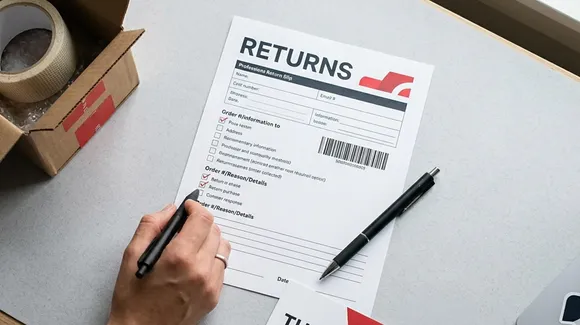
A fast return process isn’t just about receiving goods back quickly. It’s about refunding customers promptly, providing great service, and making products available for resale in pristine condition.
Sustainability is also a key focus for Superdry—across warehousing, transport, and packaging. Achieving this while keeping costs stable is extremely challenging.
And of course, peak periods are critical. Most brands generate the majority of their sales during these times, so forecasting, capacity planning, and execution are crucial.
Eric Janssen Steenberg:
Those pain points turn into necessities, and eventually into strategy. That makes perfect sense.
But how did you know you needed to partner with Bleckmann—and why has this partnership lasted for over a decade?
Panos Christoforos:
The relationship between Bleckmann and Superdry started around 2011, well before I joined the company. One of the main reasons Bleckmann was selected is their expertise in fashion logistics.
Many companies do logistics, but having deep industry-specific expertise puts you in a better position to respond to changes and challenges.
Another advantage is that Bleckmann works with many fashion brands, which allows them to share knowledge, best practices, and different ways of working across customers.
Ruud Mars:
That hyperfocus on fashion and lifestyle is exactly why I enjoy working at Bleckmann. By focusing on one segment, we can invest smarter, develop expertise faster, and share learnings across customers. If something works for customer A and benefits customer B, that’s a win-win—a true one plus one equals three.
Panos Christoforos:
Bleckmann constantly comes with new initiatives, both in warehousing and transport, to improve efficiency, reduce costs, and become greener. It’s not just about reviewing reports—it’s about continuously improving how things are done.
Eric Janssen Steenberg:
That agility is key. Ruud, what does it take day-to-day to be a true value-adding partner for Superdry?
Ruud Mars:
For me, it’s about not accepting the status quo. It’s about being proactive and always trying to do things better.
We are the last touchpoint in the supply chain and the only physical interaction between the brand and the customer. That means we need to act as an extension of the brand itself.
When a customer buys a Superdry product, it’s likely the Bleckmann team that picked, packed, shipped, and delivered it. We take that responsibility very seriously because it directly impacts customer satisfaction.
Eric Janssen Steenberg:
Looking ahead, where do you see the biggest opportunities for smarter and more efficient logistics?
Panos Christoforos:
Automation in warehousing is a big opportunity, and we’re already working on projects together. In transport, offering customers more delivery and return options is key to improving the customer experience.
Ruud Mars:
The customer decides when, how, and with whom they receive their delivery. With the right IT systems and data, we can go even further. AI is also on the horizon—there’s an enormous amount of data available across our customer base, and we’re only just starting to explore its potential.
Eric Janssen Steenberg:
Unfortunately, that’s all the time we have today. Thank you both for your valuable insights. It’s clear that the chemistry and partnership between you really drive success.
For the audience, if you have questions: Panos can be reached via LinkedIn, and the same goes for Ruud, or via the Bleckmann website.
Thank you very much for listening. Make sure to follow us on social media so you don’t miss the next episode of the Beyond Threads podcast by Bleckmann. Until then, I’m Eric Janssen Steenberg. See you soon.