








Although second-hand fashion has become a global phenomenon, the patterns of adoption and growth vary significantly across regions. The US, the UK and continental Europe together account for the majority of the global resale market, but each is evolving in its own way, shaped by local culture, consumer behaviour and policy.
United States: scale and regulatory momentum
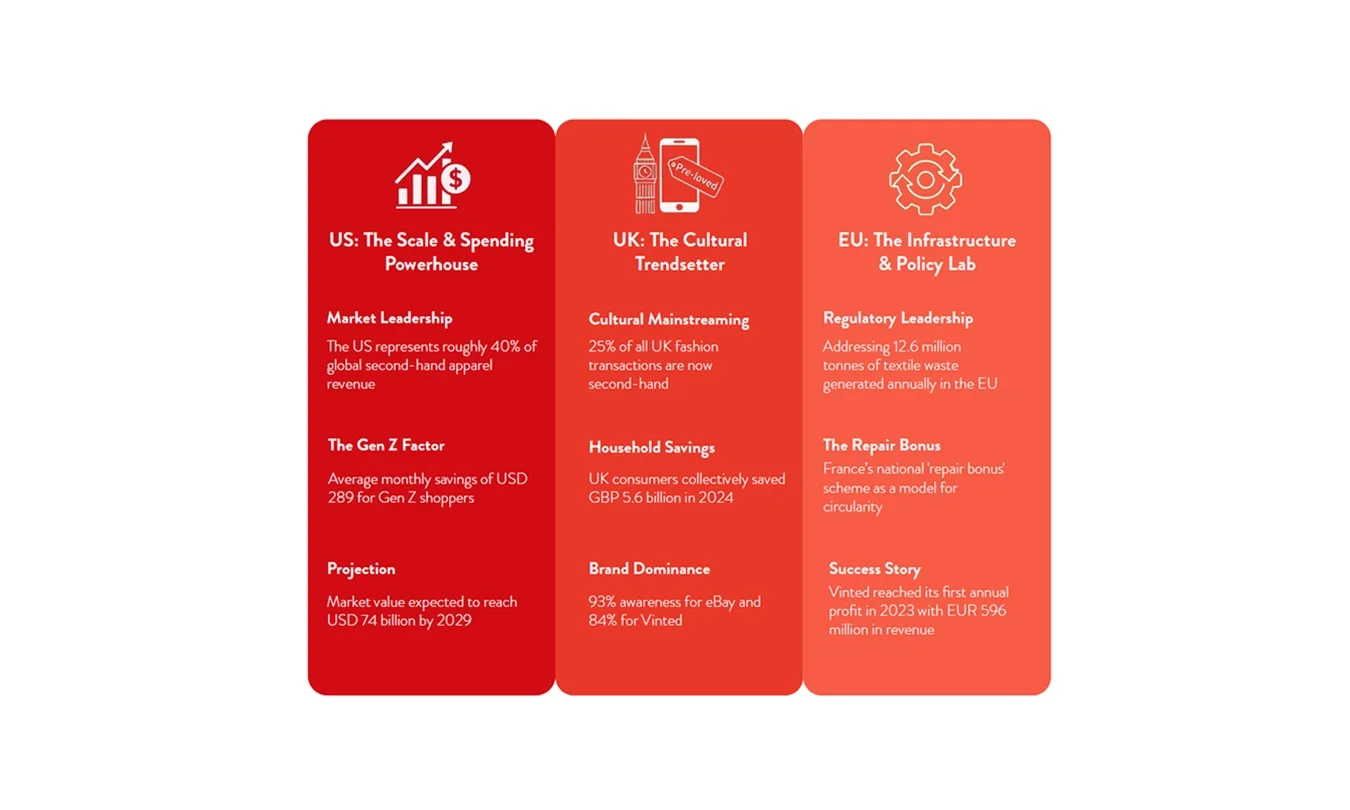
The US is the world’s largest and most mature resale market, representing roughly 40% of global second-hand apparel revenue. Estimates suggest that the US market will expand to around USD 74 billion by 2029, with growth consistently outpacing the broader apparel sector. By this point, it’s also estimated that second-hand apparel will hold a 19.97% share in the market, up from a forecast 15.87% for 2025. In 2024, resale sales grew by 14%, five times faster than the wider clothing retail industry, and online resale surged by 23% in the same year.
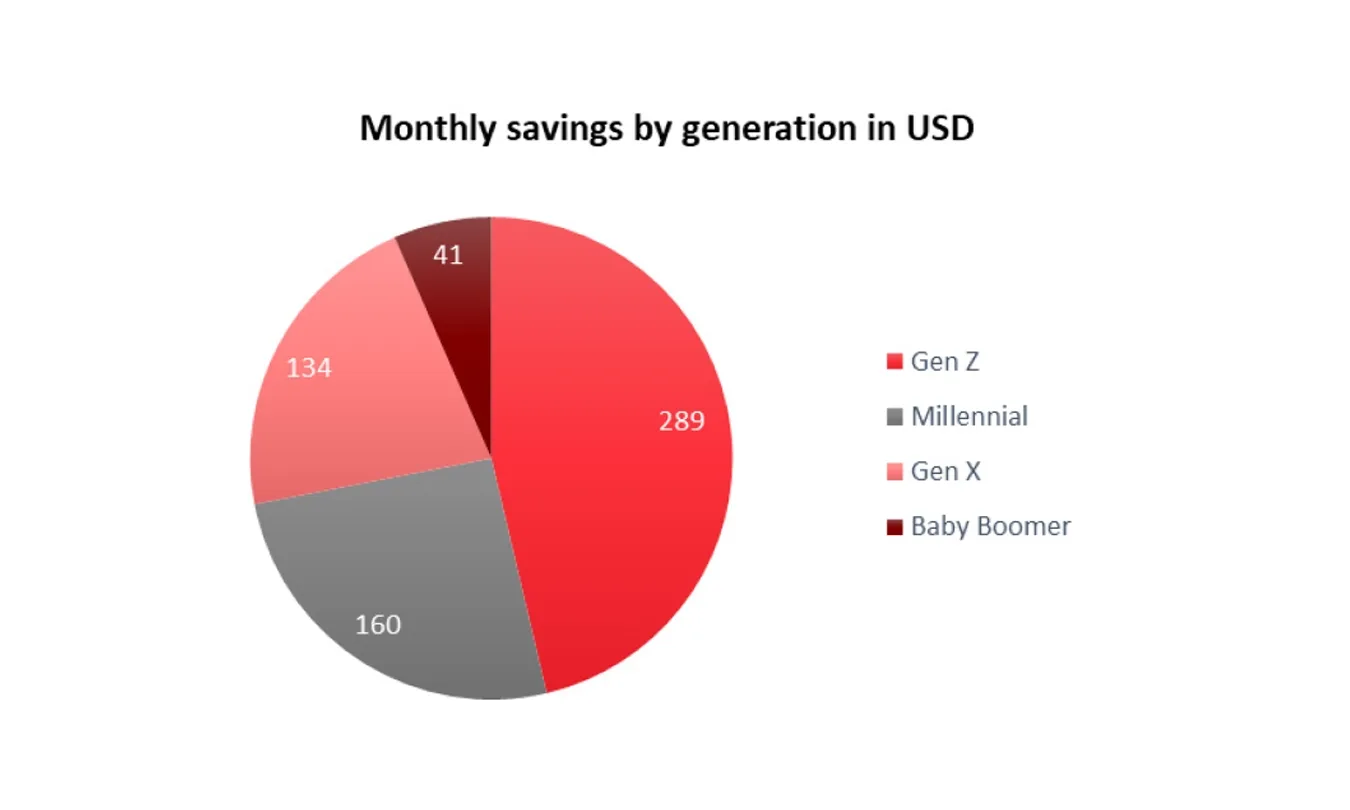
A defining feature of the US market is the breadth of participation across segments. Consumers embrace both high-volume, mass-market resale through platforms like Poshmark, ThredUp and eBay, as well as luxury consignment through specialists such as The RealReal and Fashionphile. Affordability is a primary driver, especially as households grapple with inflation and cost-of-living pressures. But sustainability and style uniqueness are increasingly important, particularly for younger shoppers. Gen Z and Millennials dominate activity: surveys show they are twice as likely as older generations to make resale their first choice when shopping for fashion and they are also more likely to save money in doing so.
Regulation is also beginning to shape the contours of the market. As previously mentioned, California’s Responsible Textile Recovery Act (SB 707) created the first EPR scheme for textiles in the US, requiring fashion companies to finance collection and recycling programmes by the end of the decade. Other states, including New York and Washington, have introduced similar bills, while Massachusetts has moved to ban most textiles from landfills altogether. These measures are laying the groundwork for resale and reuse to become embedded features of the apparel economy.
At the national level, momentum is building as well. The Government Accountability Office has called for coordinated federal action on textile waste, and new legislation such as the Americas Trade and Investment Act proposes billions in incentives for circular fashion. Industry coalitions like American Circular Textiles are also pressing for changes such as ending double taxation on second-hand goods. Together, these developments point to a future in which the US resale market is not only the largest in scale, but also one of the most regulated and structurally supported worldwide.
Affordability remains a central driver of consumer engagement. In 2025, 66% of US adults said they regularly shop second-hand, with Gen Z leading – 28% report that they thrift on a weekly basis. 72% of US consumers cited saving money as their primary reason, followed by 51% who stated it was due to the thrill of unique deals. Thrifting is increasingly viewed as an act of self-care and a cultural statement, especially among younger shoppers.
Together, the US, the UK and continental Europe show how second-hand fashion is evolving along different paths: scale and innovation in the US, cultural mainstreaming in the UK and infrastructure-led acceleration in continental Europe. Yet the destination is the same: resale is embedding itself as a structural part of fashion’s future. These regional variations highlight the diversity of the market and offer a preview of how other parts of the world may follow, adapting the second-hand model to their own cultural and policy landscapes.