






A specialist fashion 3PL should combine sector expertise, scalable fulfilment, technology integration, transparent commercial terms and brand-specific value-added services.
For growing fashion brands, the right logistics partner should support peak demand and long-term expansion without forcing unnecessary infrastructure investment.
As a fast-growing fashion brand, keeping up with rapidly increasing (sales) volumes often means expanding your logistics capabilities. However, that’s often easier said than done: developing in-house capabilities can require significant upfront investment and may not be why you started your business in the first place.
As a result, many emerging fashion brands choose to outsource their logistics to specialist third-party logistics (3PL) providers. But what should brands be looking for when selecting a fashion logistics partner?
To find out more, we asked Maxim Sion, Business Development Manager at Bleckmann. Drawing on his experience as a fashion entrepreneur, Maxim co-founded and co-owned fashion brand Black and Gold and currently he is working an making Studio Anvers a great success, he provides insights on what brands should consider when choosing a 3PL. Find Maxim’s take below
Time to outsource to a fashion logistics partner?
In the early days, most fashion brands began by fulfilling all their orders themselves. This was also the case for Bleckmann’s Bscale client Wolk Antwerp, founded by Ellen Cattebeke and Joris Smeunix. In fact, the team initially picked and packed orders at the couple’s home. And while this was feasible for a while, it quickly became inconvenient and stress adding for the pair.
“Our house was filling up with boxes and it was becoming increasingly difficult to juggle logistics activities with other business and personal commitments,” says Joris. “That’s when we decided to investigate outsourcing our logistics operations.” This trajectory was mirrored by Maxim’s own experience when he was running a fast-growing fashion brand.
In his case, the question of outsourcing arose when Studio Anvers started to face challenges with in-house fulfilment, particularly during peak sales periods such as Black Friday. “When we started Studio Anvers, we had only the most basic tools and all picking and packing was done manually”, Maxim explains. “To expand our capabilities, we would have needed to lease more warehouse space and invest in a more sophisticated technology set-up. Outsourcing to a 3PL was the logical and far more cost conscious alternative to incurring these significant costs.”
Finding a logistics 3PL that meets your brand’s needs
Fashion logistics presents unique challenges, from handling a wide variety of SKUs to managing seasonal fluctuations in demand. That’s why it’s important to choose a 3PL provider with a deep understanding ofyour industry. “A specialist fashion logistics provider will understand the challenges that brands face and offer services that are tailored accordingly”, says Maxim. “For example, they should offer value-added services such as ironing, gift kitting and product photography. They may also offer a variety of transportation options, such as garment-on-hanger shipping to minimise creasing.”
Another key consideration is operational scalability. “Many brands that don’t work with 3PLs often feel the pinch during peak seasons, when capacity can be severely stretched,” continues Maxim. “With a specialist apparel 3PL, you may have access to flexible warehousing and transportation capacity on demand – meaning you can deliver an exceptional Black Friday without paying for this extended capacity for the rest of the year.”
How to choose the best-fitting fashion logistics provider
When it comes to finding the ideal apparel 3PL for your brand, doing your research is critical. Once you’ve made a shortlist of fashion-focused 3PL providers, you need to find the one that can provide the services best suited to your brand’s needs and must-haves. Don’t forget to ask for references from each 3PL’s existing clients – ideally those with a similar profile to your brand – to get a better idea of how they would support you.
Of course, there’s plenty of research you can do online. But Maxim always recommends visiting providers in person. “Meeting the teams and looking around the facilities is the best way to get the a good understanding of the potentials of the possible fashion logistics partner,” he says. “Remember to always be more than clear about what you want to get out of the partnership, whether it’s cost reduction, improved delivery times, international expansion and / or meeting sustainability goals.”
Here are a few key questions to keep in mind when conducting your visits.
Does their service offering meet your brand’s requirements?
During the selection process, it’s essential to be clear on the exact level of service you require from a fashion logistics provider. Do they provide an end-to-end logistics solution? Do they cover your current and target markets effectively? Do they have the networks, partnerships and local knowledge to meet your expansion goals efficiently? Which partners can you work with when you integrate with them?
You should also be clear about how they will need tosupport you once the partnership is up and running. Do they have 24/7 support and dedicated account managers? Will they provide you with detailed dashboards and real-time updates on orders and inventory? Do they schedule regular check-ins and keep communication lines short to ensure they meet your needs? How do they deal with issues such as delays or lost shipments? All extremely important aspects that need to be confirmed before you can start thinking of next steps.
In addition, think about how and to what extent a potential fashion logistics partner will elevate your customers’experiences and the relationship with your brand. “To ensure that outsourcing your fashion logistics doesn’t result in a more ‘generic’ customer experience, check whether the provider can offer bespoke features,” says Maxim. “These may include customised packaging, embossing and personalisation or special care like handwritten notes, parfumed paper and special packaging. These extra touches can help you to exceed your customer’s expectations and maintain a positive brand perception as you scale.”
What are their technology and integration capabilities?
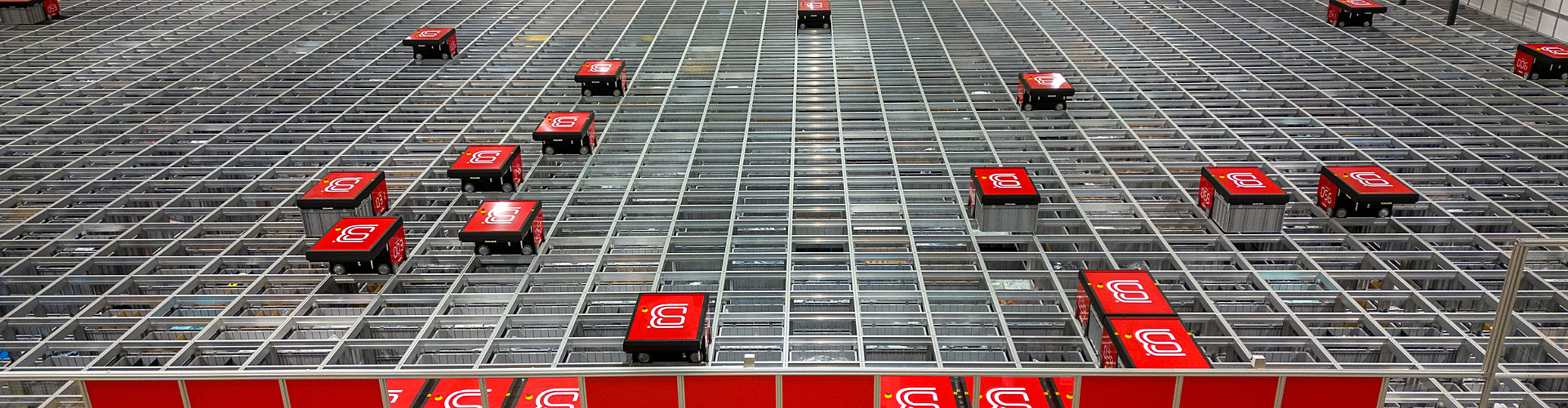
One of the main benefits of working with a dedicated fashion logistics partner is the access to the latest technology and features which they should provide. Upgrades to your operations which may otherwise remain unavailable to (smaller) brands with their own operations. From real-time order tracking to data analytics, automation and AI-driven operational optimisation, there are many ways in which technology can improve service levels, drive efficiency and improve customer experience. For example, clients of Bleckmann’s Bscale solution benefit from access to our AutoStore automated storage and retrieval system (ASRS). This can slash order processing times by up to 60%, for much faster and flawless fulfilment.
Its also important to consider how long the (IT) integration process will take. “Typically, onboarding with a 3PL involves multiple teams and several weeks of setting up, including custom IT integration between your sales platform and the 3PL’s WMS,” says Maxim. “In contrast: a plug-and-play solution like Bleckmann’s Bscale significantly simplifies the onboarding process, allowing brands to connect their e-commerce platforms to our WMS in a swift and hassle free way. Turning the mentioned several weeks in a mere few days or week.
Will they enable you to scale cost-effectively?
Of course, one of the most important considerations for brands looking to outsource will be the cost involved. Therefore, it’s important to look closely at all rates and fees. Are all rates and fees offered fully transparent and is the pricing for warehousing, fulfilment and any additional services you may need therefore clear and confirmed? Have taken all non-transactional pricing also taken into account? Are there fees for onboarding, surcharges or penalties for not meeting minimum volume requirements or monthly account or management fees? And don’t forget to ask about contract terms.
“Most 3PL contracts are signed for a period of three to five years, providing more stability and certainty for both partners,” explains Maxim. “However, shorter contract terms can really benefit brands by allowing you to test whether a 3PL’s service is truly value adding, cost-effective and with a business attire which you want to be affiliated to. That’s why our Bscale solution offers one-year contract terms – giving you the flexibility and peace of mind which you mat very well be looking for.”
You should also be wary of possible exit clauses and scalability terms. For example, what happens if your capacity needs unexpectedly increase during the contract term due to a surge in demand? “Normally, expanding your capacity would require moving inventory on a larger footprint,” says Maxim. “However, thanks to our AutoStore set-up, Bleckmann’s Bscale allows you to scale your capacity up and down within the same warehouse, without investment or delays.”
Find a fashion logistics partner that supports your ambitions
Fundamentally, you’ll only know whether a fashion logistics partner is right for you once you start working with them. Therefore, it may be useful to start with a pilot region or project to test the partnership. Be sure to define key performance indicators such as delivery times, picking accuracy or cost per order and/or unit and schedule regular reviews to assess and discuss your partners performance and address any concerns. However, as Maxim points out, finding the right fashion logistics partner for your brand is about more than meeting short-term targets.
“The ideal fashion logistics provider will be a true strategic partner, tailoring their services to your brand’s needs and offering simple and cutting edge IT integrations, clear contract terms and all the value-added services which you require,” Maxim concludes. “In short, your 3PL partner should not only be fulfilling your orders. , In order to be a successful partner to your brand, a 3PL must have helping you grow your capabilities and your company at the very core of their culture, their processes and their company’s vision.
Want to find out more about accelerating your brand’s growth journey with Bleckmann? Visit our Bscale solution page or get in contact for a free consultation with a Bleckmann expert today!