









Market size and online penetration
Fashion is arguably the largest product category in online retail. The global apparel e-commerce market was valued at approximately USD 779 billion in 2025 and is expected to rise to as much as USD 1.7 trillion by 2034.1
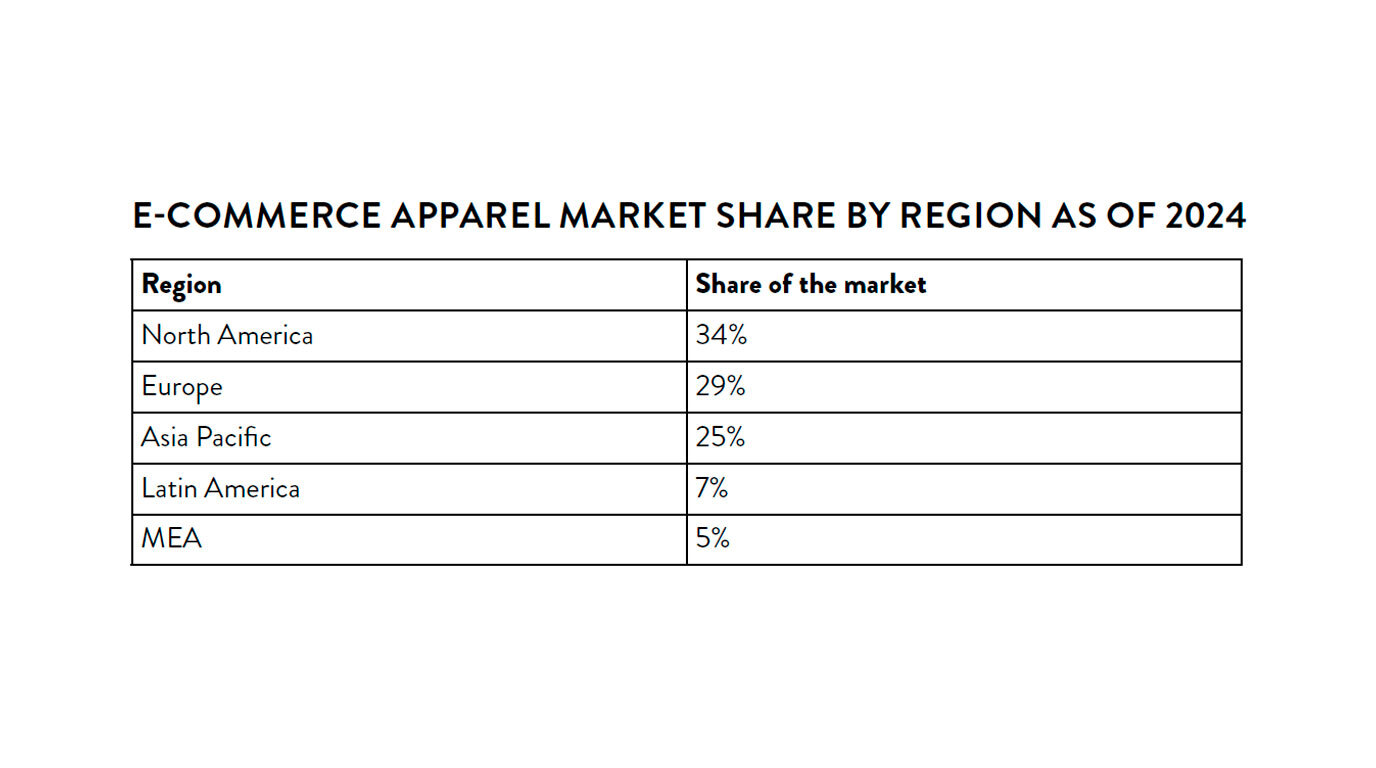
North America and Europe together account for nearly two-thirds of the global market, making the transatlantic corridor the centre of gravity for fashion e-commerce. With the market set to more than double within the decade, operational demands are intensifying.
These figures reflect how far fashion has migrated online. Globally, up to 30% of fashion retail sales are now e-commerce transactions.3
The US is further along this trajectory than Europe, but both markets follow the same pattern: a sharp acceleration during the pandemic, a partial correction as physical retail recovered, and a return to steady growth thereafter. By 2030, online penetration is expected to reach over 40% in the US and more than 35% in Europe.
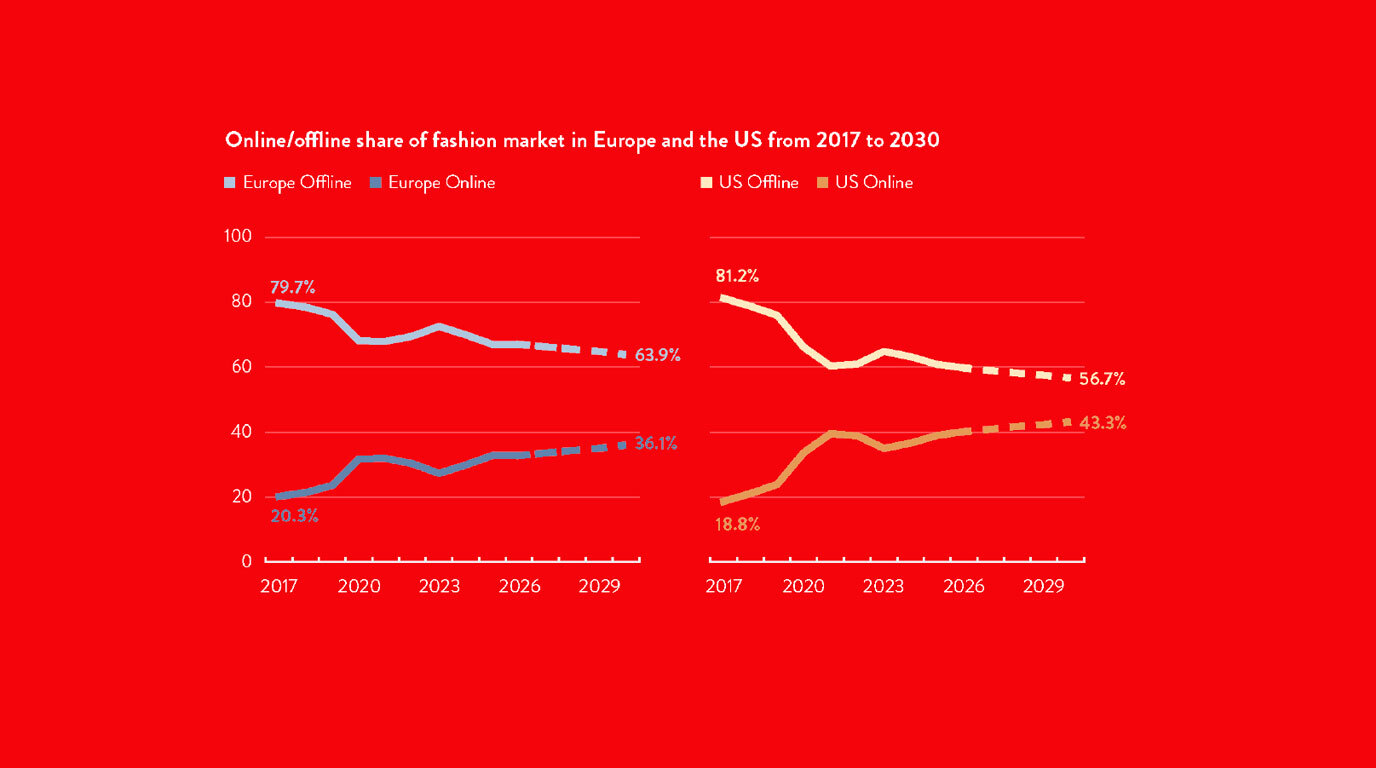
In other words, the pandemic did not create a permanent step-change but accelerated a trend already under way. For logistics operations, that trajectory translates into rising parcel volumes, greater fulfilment complexity and an ever-larger share of customer experience riding on delivery performance.
Yet headline growth numbers mask a more complex picture. Today’s expansion is no longer driven primarily by new customers migrating online. It is shaped by a handful of powerful drivers and a few persistent headwinds.
Market drivers and headwinds
Worldwide e-commerce revenue grew by 13% in 2025, with improved online shopping experiences and a growing base of internet users doing the heavy lifting. On the other side, negative consumer sentiment and supply-chain pressure remain the biggest drags.4 The pattern maps onto fashion: better site experiences and AI-driven personalisation are lifting purchase frequency and order values, while fulfilment friction and cautious consumers make logistics reliability a decisive lever. The addressable market is larger than ever but the challenge of serving it has grown in step.
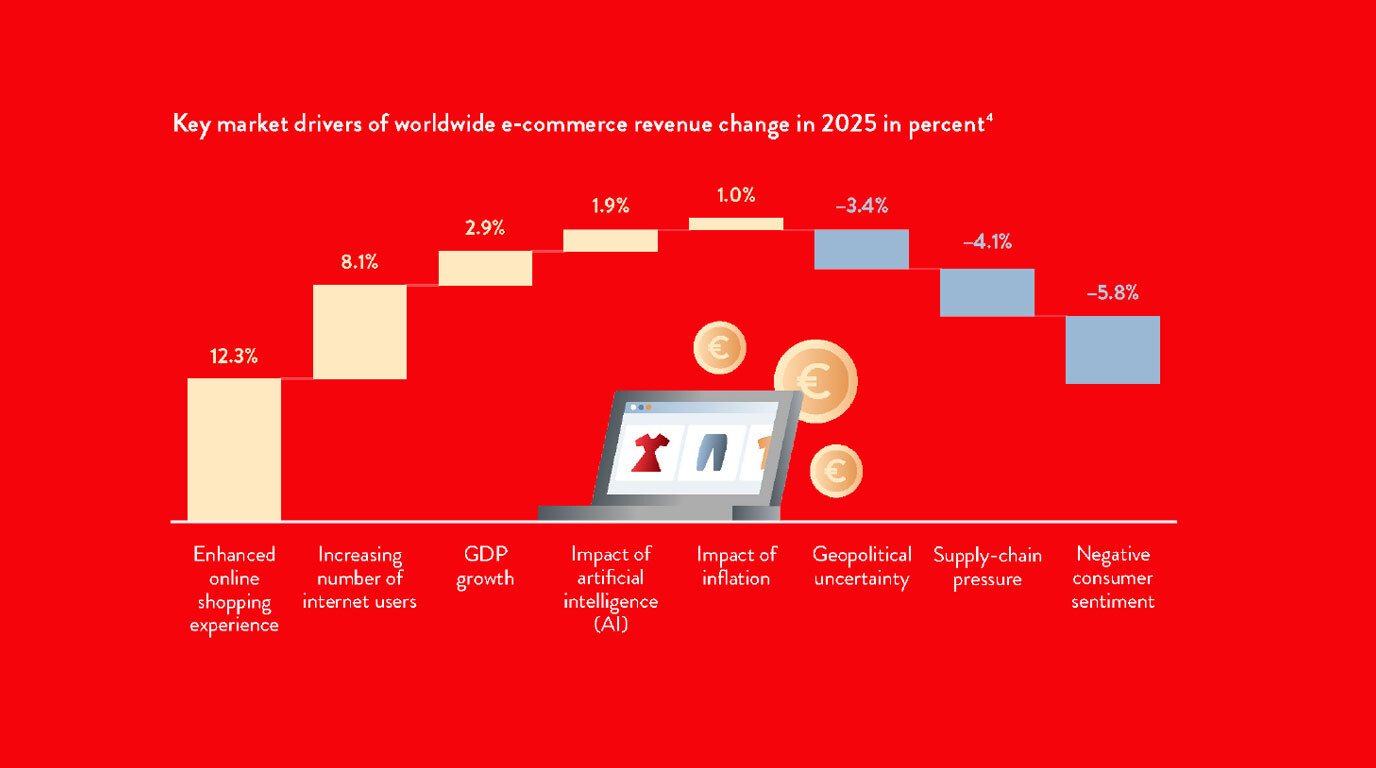
Each of these drivers creates its own operational ripple effects, but it is at the consumer level that they converge most visibly.