





Being a European fashion brand in 2026 presents many challenges from a sustainability perspective. From packaging to transportation and product lifecycles, more and more operations are coming under regulatory scrutiny. And while many brands are tackling these challenges head-on with proactive strategies, smart collaboration with partners across the value chain is essential to achieve impactful change. Third-party logistics (3PL) providers are one such partner for many brands. So, how can a 3PL support your brand's sustainability ambitions?
Overcoming the barriers to fashion circularity
In Europe, legislation such as the new Extended Producer Responsibility (EPR) is increasingly requiring fashion brands to take greater control of their entire value chain. This means that brands must have measures in place to limit the amount of products sent to landfill. To address this issue, more fashion brands are turning to the concept of circularity – the principle of extending the life of items rather than relying on new production.
A good place to start with circularity is reverse logistics. The problem of returns in the fashion industry is well documented, particularly in e-commerce where a significant proportion of purchases are returned each year. Some returned items are damaged or soiled, and in a linear ‘take-make-dispose’ system, these would typically end up in landfill. In a circular system, however, these products can be refurbished and resold, reducing clothing waste.
Some 3PLs are already integrating value-added services that facilitate circularity into their returns processes. For example, Bleckmann’s Renewal Workshop has successfully launched returns-focused garment renewal projects with major brands such as Otrium. These initiatives mean that damaged returns can be resold, helping companies meet their sustainability goals. What's the key to the success of these projects? Effective collaboration.
Driving sustainability through collaboration
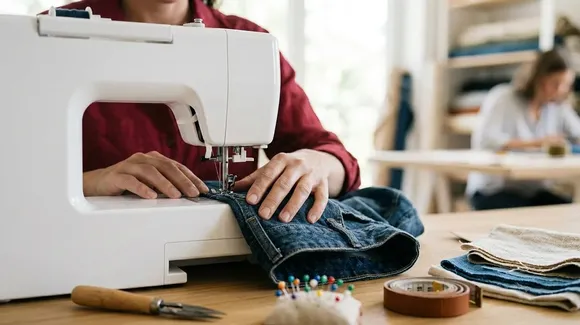
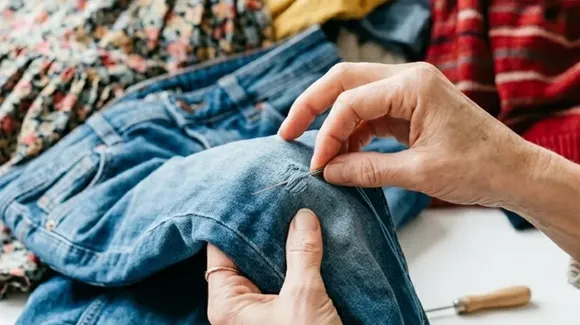
By working closely with brands, 3PLs can ensure that their circular solutions are tailored to their specific operational needs. Sometimes these requirements are quite simple. “Many returns have minor issues such as a missing button, broken zip or stains that wash out easily,” says Taylor Hill, Senior Manager Circular Solutions at Bleckmann. “These items are simple to clean, repair and refurbish so that they can be sold again.”
However, some items are more difficult to restore so that they’re ready for resale. These include leather and multi-material items, such as shoes and suitcases. But together with brands and industry experts, 3PL providers can find solutions to even the most complex renewal challenges. For example, The Renewal Workshop (TRW) has fully operational handbag, footwear and luggage cleaning and repair programmes in place, giving a second life to the more difficult-to-renew items within the fashion and lifestyle space.
Taking the next steps in fashion circularity
While the processes for renewing garments such as shirts and dresses have been established for years, renewing leather goods is more complex. “We’re going to see a real decline in the use of leather as a primary material unless there is a huge investment in finding ways to reuse and recondition it,” Taylor continues. “That’s why we were excited to offer a specialised process that brands can use to recondition returned leather items, such as shoes and handbags.”
TRW’s leather recovery pilot project was launched at Bleckmann’s warehouse in the town of Grobbendonk, Belgium. Together with an industrial shoe repair specialist, Bleckmann has been exploring ways to extend the life of leather footwear. For example, our research has shown that certain types of footwear often only require a deep clean rather than a full repair. We’ve therefore invested in specialist steam cleaning equipment to get shoes looking spotless, as well as an ozone cabinet and drying equipment to complete the process. This process has already shown promising results.
Another product category that's traditionally difficult to renew is luggage, which is the focus of another renewal service we offer at our Grobbendonk site. To prevent damaged bags and suitcases from being thrown away prematurely, Bleckmann has brought in another dedicated industry expert to help establish an efficient and scalable renewal process. “We now have the skills and knowledge in place to address a whole range of issues – whether it’s a broken handle or a wheel that’s become misaligned,” adds Taylor. “This will be essential in helping our brand partners develop sustainable revenue streams and connect with customers in new ways.”
Our vision for a circular fashion future
With multiple circular projects well underway, and the skills and equipment in place, TRW is ready to take the next steps in its journey towards facilitating circularity. “By widening the scope of the renewal services that we offer, we can become an even more indispensable partner to our clients – helping them to achieve their sustainability goals,” concludes Taylor. “The processes we’ve developed are fully scalable, and the plan now is to keep developing our footwear and luggage renewal capabilities – including aluminium luggage. We’re even looking at expanding to our facilities in Almelo, the Netherlands, and Columbus, Ohio.”
As more brands seek to adopt circular models, Bleckmann's circular capabilities are expected to become increasingly important to brands' sustainability strategies. Of course, circular solutions must be implemented in a way that enables exceptional customer experiences and continued profitability. So by innovating alongside our customers in line with their needs, we can be a key partner in creating a more responsible fashion value chain.
Want to discuss your fashion brand's circularity strategy? Contact us today for a free consultation with a Bleckmann expert!