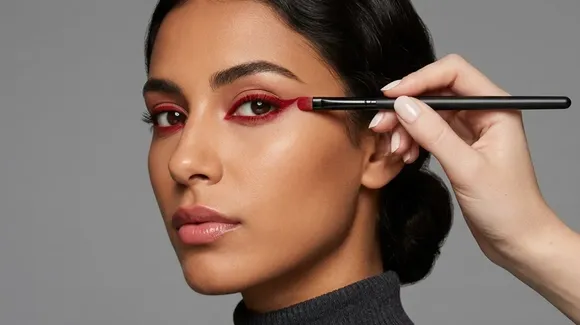









Beauty subscription boxes – bundling a range of desirable products into a single package delivered to your door – can be a valuable recurring revenue model. However, they only work if the fulfilment is consistent. A box that arrives late, with the wrong contents or poorly presented, gives a subscriber an immediate reason to cancel. And getting it right is deceptively difficult. Here’s what subscription fulfilment requires, and what to look for in a 3PL partner to deliver it.
Why subscription fulfilment is harder than standard e-commerce
Most brands entering the subscription market underestimate just how different the operational requirements are from standard e-commerce. The volume pattern alone is completely different. With orders spread across the month, subscriptions create a concentrated dispatch window in which hundreds or thousands of boxes must go out in a matter of days. A 3PL that is more used to standard B2C fulfilment may not have the wave planning, pre-allocated stock management or kitting capacity to absorb that kind of peak without errors.
Customised subscriptions add further complexity. When subscribers are allowed to choose their own shades, formulations or product types, every box has its own pick list. Moreover, picking accuracy requirements are higher than in almost any other fulfilment context, because the wrong shade of foundation or the wrong cleanser will be immediately obvious to the customer. Errors like these can quickly turn into cancellations.
Getting the inventory right before dispatch day
Because subscription fulfilment runs on a fixed schedule, stock must be allocated to an upcoming drop before kitting begins. This has two implications for your 3PL: it must have real-time visibility into inventory, and it must have the capability to ring-fence subscription stock, so it doesn’t bleed into standard B2C e-commerce orders. To achieve this, your warehouse management system needs to track inventory at the SKU (and batch) level, in real time. This gives brands and their operations teams a clearer picture of what’s currently available, what has been allocated and what needs to be replenished before the dispatch window opens.
Subscriptions for beauty and personal care products add further complexity through the need for lot tracking and expiry management. A subscription box that contains a product that will soon be out of date is not only an operational problem; it’s bad for your brand image as well. The solution is ‘First Expired, First Out’ (FEFO)-based picking, which ensures stock rotation works correctly across both standard B2C fulfilment and subscription models.
Kitting, repacking and the unboxing experience
For beauty brands, the presentation of subscription boxes is as central to their as the products they contain. The unboxing experience – presentation standards, tissue wrapping, branded inserts, gift-with-purchase items – is part of what subscribers are paying for. A 3PL that doesn’t have a dedicated kitting and repacking capability will struggle to deliver this kind of experience without errors or inconsistencies creeping in. Bleckmann has dedicated kitting and custom repacking services for exactly this kind of work, so when a brand adds a seasonal gift or a new sample to a box, the logistics operation can handle the change without causing disruption.
Scalability: Planning for growth and peaks
The fixed schedule of subscription fulfilment can give the impression of predictability, but subscriber numbers themselves are often anything but. A successful campaign, media coverage or an influencer partnership can drive an increase in subscribers that the next dispatch window must absorb. But if a 3PL can’t scale quickly enough, the result will be fulfilment delays or poorer service quality, potentially turning what could have been a lucrative repeat purchase into a one-off.
One solution to this scalability problem is automation. For example, Bleckmann’s automated storage and retrieval systems, which currently operate at multiple sites across our network, are well adapted for this kind of demand variation. Such systems can be programmed ahead of known peaks so that high-demand items are retrieved faster when volume spikes, and capacity can be expanded without disrupting the operations already running.
Tracking, transparency and the post-dispatch experience
Once a subscription box leaves the warehouse, the anticipation begins. One feature of a regular dispatch date is that it creates an expectation of transparency and regularity – so keeping subscribers in the dark about order status is counterproductive. Information gaps between dispatch and delivery, particularly when there are delays, can generate customer service contacts, frustration and, in the worst-case scenario, avoidable subscription cancellations.
The fix is straightforward: share tracking updates from the moment the order is confirmed. A 3PL with strong carrier integration can pass milestone information to the brand in real time, which can then be automatically shared with the subscriber. With no manual intervention, the number of ‘Where Is My Order’ (WISMO) requests can be reduced, freeing up your teams to focus on more complex enquiries and delivering a superior overall customer experience.
What to look for in a 3PL subscription partner
Subscription fulfilment places specific demands on a logistics operation that go beyond standard B2C capabilities, and choosing the right partner is both a strategic and operational decision. The questions worth asking before you commit include: Does the WMS support pre-allocation of subscription stock? Are there dedicated kitting and repacking capabilities? What’s the picking accuracy rate? Can the operation scale quickly enough to absorb a subscriber uptick without service levels slipping? And, perhaps most importantly, does the 3PL have genuine experience managing recurring dispatch windows, or is subscription fulfilment a secondary capability?
The right partner will bring category knowledge, data infrastructure and proactive planning to the table. In a fulfilment model where the margin for error is low and the cost of churn is high, that kind of strategic support is what separates a logistics provider from a true logistics partner.
Want to find out how Bleckmann can support your beauty subscription fulfilment? Get in touch today for a free consultation with one of our experts.